
Table of Contents
Breaking into auto detail jobs offers a unique combination of hands-on work, entrepreneurial potential, and steady demand across the automotive service industry. Whether you’re considering a career change or exploring entry-level opportunities, understanding what these positions truly entail separates realistic expectations from common misconceptions.
The auto detailing field encompasses far more than basic car washing. Professional detailers restore vehicle aesthetics through paint correction, ceramic coating application, interior reconditioning, and specialized cleaning techniques that preserve vehicle value.
Mobile detailing entrepreneurs often achieve higher income ceilings by eliminating overhead costs and retaining full service fees. However, this requires initial equipment investment, business licensing, and effective marketing to build a client base.
Commission-based structures incentivize upselling ceramic coatings, paint protection film, and premium service packages. Top performers in commission environments can significantly exceed base salary expectations through consistent add-on sales.
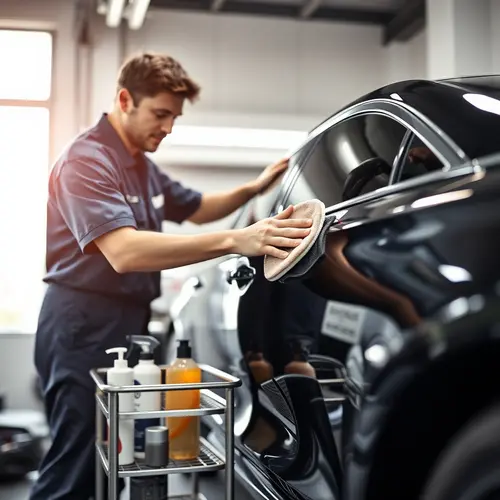
What Do Auto Detail Jobs Actually Involve?
Daily responsibilities vary significantly based on the work environment. Dealership detailers focus on high-volume turnover, preparing pre-owned inventory and serviced vehicles for customer delivery. Mobile detailing technicians travel to client locations with portable equipment, managing their own schedules and customer relationships. High-end detail shops specialize in luxury vehicle restoration, requiring advanced skills in paint correction, swirl mark removal, and multi-stage polishing. These positions demand meticulous attention to surface preparation and defect identification that less experienced technicians might overlook. Entry-level roles typically start with interior vacuuming, window cleaning, and basic exterior washing. As proficiency develops, technicians progress to compound application, machine polishing, and eventually specialized services like headlight restoration or engine bay detailing.Core Skills Required for Auto Detail Jobs
Technical proficiency extends beyond physical effort. Successful detailers master surface analysis, understanding how different paint types, clear coat conditions, and material compositions respond to various products and techniques.- Chemical knowledge for safe product application and surface compatibility
- Machine operation skills for dual-action polishers and extraction equipment
- Time management to maintain profitable hourly rates
- Customer communication for managing expectations and upselling services
- Problem-solving abilities to address paint defects, stains, and damage
Compensation Structure and Earning Potential
Salary ranges for auto detail jobs vary dramatically based on geographic location, employment model, and skill level. Entry-level positions at car washes or quick-service chains typically start between $12-$15 per hour, while experienced technicians at premium shops command $18-$25 hourly or more.| Position Type | Typical Pay Range | Income Model |
|---|---|---|
| Entry-Level Dealership | $25,000-$35,000/year | Hourly + Benefits |
| Experienced Shop Technician | $35,000-$50,000/year | Hourly or Commission |
| Mobile Detailing Business | $40,000-$80,000/year | Self-Employed Revenue |
| High-End Specialist | $50,000-$70,000+/year | Flat Rate or Project-Based |
Training Pathways and Certification Options
No formal education requirements exist for most auto detail jobs, creating accessible entry points for motivated individuals. Many detailers learn through on-the-job training, starting with basic tasks and gradually assuming more complex responsibilities under experienced supervision. Professional certification programs through organizations like the International Detailing Association (IDA) validate skill proficiency and industry knowledge. While not mandatory, certification demonstrates commitment to professional standards and can justify premium service pricing. Specialized training in ceramic coating application, paint correction techniques, or specific product lines often comes directly from manufacturers. Brands like Gtechniq, Ceramic Pro, and XPEL offer installer certification programs that enhance credibility and unlock authorized dealer opportunities.Industry Realities Most Job Seekers Overlook
Physical demands represent the most underestimated aspect of auto detail jobs. Extended periods of standing, repetitive motion from machine polishing, and working in various weather conditions (for mobile detailers) create genuine physical strain that improves with conditioning but never fully disappears. Chemical exposure requires proper respiratory protection and skin safeguards. Professional-grade compounds, polishes, and cleaning agents contain potent ingredients that demand ventilation and personal protective equipment despite their common use in the industry.Common Misconceptions Debunked
The notion that detailing is “easy money” collapses quickly under real-world conditions. Quality work requires hours of concentrated effort per vehicle, and rushing compromises results that damage professional reputation. Another persistent myth suggests detailing has no career advancement. In reality, progression paths lead to shop management, training coordinator roles, or business ownership. Experienced detailers also transition into automotive reconditioning, paint protection film installation, or ceramic coating specialization—all higher-margin service categories. The assumption that any car enthusiast can immediately excel professionally also misleads newcomers. Hobby-level detailing differs substantially from commercial service delivery where speed, consistency, and client satisfaction determine business viability.Auto Detail Jobs: The Detail Business Evolution
The detailing industry has transformed dramatically with technology integration and product advancement. Ceramic coatings replaced traditional waxing as the premium protection standard, creating new revenue streams but requiring specialized application training. Mobile services gained market share as busy professionals prioritize convenience over marginally lower prices. This shift enabled individual detailers to launch profitable businesses without expensive brick-and-mortar overhead. However, market saturation in some regions intensified competition, making differentiation through specialized services or exceptional customer experience increasingly critical for business survival.Finding and Landing Your First Role
Job opportunities concentrate in several key sectors. New car dealerships maintain constant detailing needs for inventory preparation and service department vehicle cleaning. Used car lots require even more extensive reconditioning work, often dealing with neglected vehicles that need substantial restoration. Independent detail shops range from basic operations to high-end boutiques serving luxury vehicle owners. Each environment offers different learning opportunities and compensation structures worth evaluating based on career goals. Online platforms like Indeed, Craigslist, and Facebook Marketplace frequently list detailing positions, though direct applications to local shops often yield better results. Many shops prefer hiring through referrals, making networking within local automotive communities valuable.Building a Competitive Application
Even without formal experience, demonstrating genuine interest separates candidates. Photographing personal vehicle detailing projects shows initiative and attention to detail that employers value. Highlighting transferable skills from previous work proves adaptability. Customer service experience, physical labor background, or sales proficiency all apply directly to detailing environments. Willingness to start in entry-level roles and learn systematically accelerates career development more effectively than demanding advanced positions prematurely.Long-Term Career Considerations
Sustainability concerns revolve around physical longevity and income growth potential. Detailers in their 40s and 50s often transition toward business management, training roles, or specialized services that reduce repetitive physical strain. Income plateaus exist in employee positions unless advancing to shop management or commission-heavy roles. Business ownership removes earning ceilings but introduces operational responsibilities beyond hands-on detailing work. The rise of waterless detailing products, eco-friendly chemicals, and advanced protection technologies continues reshaping service offerings. Staying current with product innovations and technique refinement maintains competitive positioning throughout a detailing career. For those entering auto detail jobs with realistic expectations about physical demands, income trajectories, and continuous skill development requirements, the field offers stable employment with genuine entrepreneurial potential. Success ultimately depends on work ethic, attention to quality, and commitment to mastering both technical execution and customer relationship management. Learn the craft in our detailing guide and vinyl restorer picks; career data at BLS sets expectations. Steady auto detail jobs reward skilled hands.Frequently Asked Questions (FAQs)
Related reading: Mileage Blockers: 7 Risks You Must Know.
How much do auto detail jobs pay?
Entry roles pay hourly plus tips, experienced detailers earn more with paint correction skills. Auto detail jobs in dealerships trade top pay for steady volume.
What skills do beginners need first?
Washing technique, interiors, and customer communication. Master those before touching polishers or ceramic coatings.
Should you start your own detailing business?
Yes once skills and clientele prove out. Mobile auto detail jobs convert to businesses with low startup costs and repeat clients.
Dinda Margareta
Dinda Margareta is a senior automotive editor at Auto Store covering collision repair, EV tech, and classic restoration. 5+ years, 130+ guides. Method: OEM position statements and repair data cross-reference. Author of 2,333 auto guides since 2022.


More Stories
Collision Auto Center: Expert Guide to Quality Repair
Auto Detailing: Ultimate 7-Step Expert Guide
Auto Body Repair: 5 Essential Tips That Save Money