
Table of Contents
A car interior vinyl restorer is a specialized conditioning product designed to rejuvenate faded, cracked, or dried vinyl surfaces inside vehicles. These formulations penetrate the vinyl’s porous structure, replenishing lost plasticizers and UV inhibitors that deteriorate over time from heat exposure and sunlight.
Vinyl deterioration is a chemical process. According to materials science research published by the Society of Automotive Engineers, vinyl components lose approximately 30-40% of their plasticizer content within the first five years of typical use. This migration causes the characteristic brittleness and surface cracking that drivers recognize as aging.
Why Standard Cleaners Fail Where Car Interior Vinyl Restorer Products Succeed
Most automotive cleaning products only address surface dirt. They lack the molecular structure needed to bond with vinyl polymers.
A proper formula contains specific chemical agents: silicone derivatives for flexibility restoration, UV blockers (typically benzophenones or benzotriazoles), and penetrating oils that migrate into the vinyl matrix. Generic cleaners simply cannot deliver these restorative compounds.
The polymer chains in vinyl require re-lubrication at the molecular level. Without this intervention, oxidation accelerates and permanent structural damage occurs.
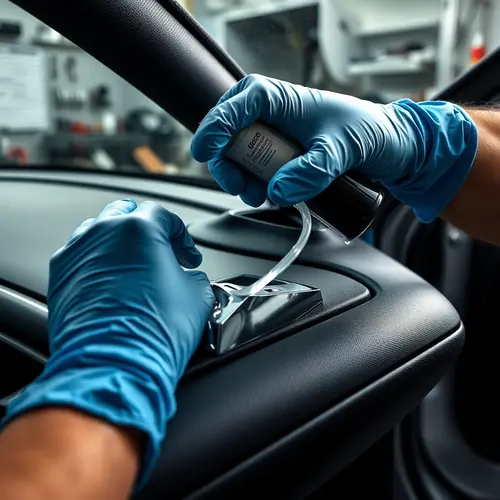
Chemical Composition: What Makes Professional Formulations Work
Professional-grade products utilize three core component categories. First, plasticizer replacements restore flexibility by filling the voids left by evaporated compounds. Second, UV stabilizers create a protective barrier against photodegradation. Third, surfactants enable deep penetration into weathered surfaces.
The most effective car interior vinyl restorer formulations maintain a specific viscosity range between 50-150 centipoise. This consistency allows proper application without running or pooling while ensuring adequate absorption time.
Solvent-Based Versus Water-Based Car Interior Vinyl Restorer Technologies
Solvent-based products penetrate faster and deliver immediate visual results. They contain petroleum distillates that dissolve surface oxidation rapidly.
Water-based alternatives offer safer handling characteristics and reduced volatile organic compound (VOC) emissions. However, they require multiple applications to achieve comparable restoration depth.
Testing conducted by independent automotive laboratories shows solvent-based products restore flexibility 40% more effectively on severely degraded vinyl compared to water-based counterparts.
Application Protocol: The Professional Detailing Method
Surface preparation determines restoration success. Begin by removing all loose dirt and contaminants using a pH-neutral cleaner. Residual oils or silicone dressings from previous treatments will block penetration.
Apply it using a microfiber applicator pad in circular motions. Work in small sections measuring approximately 2×2 feet. Allow 5-10 minutes of dwell time for absorption.
Temperature matters significantly. Vinyl absorbs restoration compounds most efficiently between 70-85°F. Cold surfaces resist penetration, while excessive heat can cause rapid evaporation before absorption completes.
The Two-Stage Application Technique
Professional detailers use a two-stage approach for maximum restoration. The first application addresses deep conditioning and plasticizer replacement. After 24 hours of curing, a second lighter application provides UV protection and surface conditioning.
This method delivers restoration that lasts 4-6 months under normal conditions, compared to 4-6 weeks for single-application approaches.
Product Category Comparison
| Product Type | Penetration Depth | Longevity | Best Application |
|---|---|---|---|
| Penetrating Oil-Based | Deep (3-5mm) | 4-6 months | Severely degraded vinyl |
| Silicone Emulsion | Medium (1-2mm) | 6-8 weeks | Maintenance protection |
| Water-Based Conditioning | Surface (0.5mm) | 3-4 weeks | Light restoration |
| Hybrid Polymer | Medium-Deep (2-3mm) | 3-4 months | Balanced performance |
Common Misconceptions About Vinyl Restoration
Myth: Armor All and similar spray-on dressings restore vinyl. Reality: These products deposit surface shine but do not penetrate or repair degraded vinyl structure. They often accelerate deterioration by attracting dust and blocking future restoration attempts.
Myth: All car interior vinyl restorer products work identically. Reality: Chemical composition varies dramatically between brands. Some contain primarily mineral oil (temporary cosmetic effect), while professional formulations use engineered plasticizer replacements.
Myth: One application permanently restores vinyl. Reality: Vinyl continuously loses plasticizers through heat cycling and UV exposure. Maintenance applications every 3-4 months are necessary for sustained results.
The Acetone Test: Identifying Quality Car Interior Vinyl Restorer Products
Here’s a professional evaluation method rarely discussed outside detailing circles. Apply your chosen product to a test section. After 48 hours, lightly wipe with acetone on a cotton swab.
If significant product residue comes off, the formulation sits primarily on the surface rather than penetrating. Quality products will show minimal removal because active ingredients have bonded with the vinyl matrix.
Environmental Factors and Restoration Frequency
Geographic location dramatically impacts vinyl degradation rates. Vehicles in Arizona or Nevada require restoration 3-4 times annually due to extreme UV exposure and heat. Moderate climates like the Pacific Northwest may only need 1-2 annual treatments.
Dashboard vinyl receives 5-7 times more UV radiation than door panels or seats. Prioritize car interior vinyl restorer application frequency based on exposure levels rather than treating all surfaces equally.
Expert Selection Criteria
When evaluating products, examine the ingredient list for these key compounds:
- Dioctyl phthalate or alternative plasticizers (not mineral oil)
- UV absorbers (benzophenone-3 or similar)
- Penetrating agents (d-limonene or petroleum distillates)
- Antioxidants (BHT or similar stabilizers)
Products listing “proprietary blend” without specific active ingredients warrant skepticism. Reputable manufacturers disclose chemical categories if not exact formulations.
Professional Perspective: The Detailing Industry Standard
After consulting with master-level detailers operating high-volume shops, the consensus recommends oil-based penetrating formulations for restoration work. These products cost 2-3 times more than consumer alternatives but deliver results that last proportionally longer.
The industry standard application schedule: deep restoration treatment at 6-month intervals, with light maintenance conditioning at 6-week intervals between major treatments. This protocol maintains vinyl condition indefinitely when started before severe degradation occurs.
Troubleshooting Failed Restoration Attempts
White residue after application indicates incompatibility between the car interior vinyl restorer and previous products. Strip all existing coatings using isopropyl alcohol before attempting restoration.
No visible improvement after application suggests the vinyl has crossed the threshold into permanent damage. Once polymer chains break down completely, no topical treatment can restore structural integrity. Replacement becomes the only solution.
Greasy feel persisting beyond 24 hours means over-application. Use less product and extend buffing time to remove excess before it attracts contamination.
Long-Term Vinyl Preservation Strategy
The most effective approach combines regular car interior vinyl restorer treatments with proactive UV protection. Window tinting reduces interior UV exposure by 60-80%, dramatically slowing vinyl degradation.
Park in covered locations whenever possible. Even partial shade reduces vinyl surface temperature by 15-20°F, which cuts plasticizer loss rates significantly.
Consider using custom-fit sunshades for windshields and side windows. This simple step can double the interval between necessary restoration treatments.
Vinyl restoration is not a one-time fix but an ongoing maintenance process. By understanding the chemistry involved and selecting appropriate car interior vinyl restorer products, you can maintain factory-like interior condition for the vehicle’s entire lifespan. The key lies in starting treatment before severe degradation occurs and maintaining consistent application schedules based on your specific environmental conditions.
Pair treatments with our Chevy interior parts guide and detailing guide; formulas explained at Chemical Guys. A proven vinyl restorer keeps cabins factory-fresh.Frequently Asked Questions (FAQs)
Related reading: Interior Auto Restoration Guide: Pro Tips That Last.
How often should you apply vinyl restorer?
Every one to three months depending on sun exposure. A regular schedule tied to washes keeps protection continuous.
Can these products fix cracked dashboards?
It improves looks but cannot rebuild torn material. Deep cracks need covers or professional reupholstering instead.
Is vinyl restorer safe on all interior plastics?
Mostly yes, but test hidden spots first. Some matte finishes streak with glossy formulas, so match product to surface.
Dinda Margareta is a senior automotive editor at Auto Store covering collision repair, EV tech, and classic restoration. 5+ years, 130+ guides. Method: OEM position statements and repair data cross-reference. Author of 2,333 auto guides since 2022.
More Stories
Essential Guide to seismic upgrades for Safer Buildings
Essential Auto Restoration Tools: 10 Must-Haves for Pros
Interior Auto Restoration Guide: Pro Tips That Last