
Table of Contents
Building a correct kit of auto restoration tools determines whether a project finishes on budget or stalls in frustration. The core requirement spans metal shaping, surface preparation, mechanical assembly, and electrical diagnostics. Missing a single critical item often forces improvised repairs that compromise structural integrity or finish quality.
Categorizing Your auto restoration tools for Maximum Efficiency
Organize the shop by workflow phase. Metal work comes first, followed by paint preparation, mechanical rebuild, and final assembly. This sequence prevents cross-contamination — grinding dust ruins fresh primer, and brake fluid destroys paint instantly. A rolling cabinet system with labeled drawers saves hours of searching over a multi-year build.
Metal Work: The Foundation of auto restoration tools
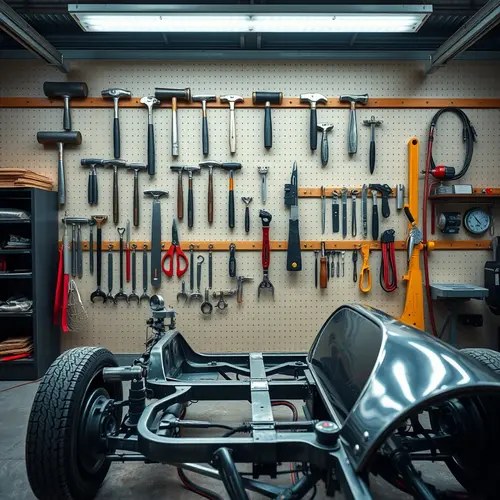
Body repair demands specific hammers and dollies. A pick hammer, shrinking hammer, and general-purpose pick finish most dents. Pair these with a heel dolly, toe dolly, and a spoon dolly for crown access. According to SEMA technical guidelines, using the correct dolly profile prevents oil-canning in large panels. An English wheel remains optional for amateurs but essential for custom panel fabrication. A quality MIG welder with 115/230V capability handles sheet metal up to 1/8-inch with proper wire feed speed.
Cutting tools need precision. A plasma cutter offers clean edges on thicker stock, but a simple 4.5-inch angle grinder with a thin cutoff wheel handles 90 percent of rust removal. Always wear a full-face shield; OSHA standards cite eye injuries as the leading preventable trauma in metal shops. Invest in a panel beater kit with body files for final contour trueing before filler application.
Paint Preparation and Application Essentials
Surface prep dictates paint longevity. Dual-action (DA) sanders in 6-inch and 3-inch sizes cover flats and contours without leaving swirl marks. A long-board sander — essentially a hand-held block with vacuum assist — keeps body lines straight across doors and quarters. The Society of Collision Repair Specialists emphasizes that consistent grit progression (80, 180, 320, 400, 600) prevents solvent pop and adhesion failure.
Spray equipment requires clean air. A two-stage compressor delivering 15 CFM at 90 PSI feeds a HVLP gun with a 1.3mm tip for basecoat and 1.4mm for clear. An inline desiccant filter and regulator at the gun inlet remove oil and water. Cheap regulators drift; spend the extra fifty dollars on a SATA or Devilbiss unit. A heated, filtered spray booth is ideal, but a portable inflatable booth with charcoal filtration meets EPA VOC standards for home shops.
Mechanical and Drivetrain Rebuild Tools
Engine work demands precision measurement. A dial bore gauge, micrometer set (0-6 inch), and feeler gauges verify tolerances against the factory service manual. Torque wrenches in 1/4, 3/8, and 1/2-inch drives must be calibrated annually. Click-type wrenches lose accuracy if stored under tension; always dial them down to zero after use.
Specialty pullers and presses separate seized components without damage. A three-jaw harmonic balancer puller, a pitman arm puller, and a 12-ton shop press cover most tasks. For transmissions, a snap-ring plier set with interchangeable tips (internal, external, straight, 90-degree) is non-negotiable. Transmission jack adapters align heavy units during installation, saving back strain and preventing case cracks.
Electrical Diagnostics and Wiring Restoration
Modern restorations blend vintage looms with upgraded charging systems. A professional multimeter measuring voltage, resistance, frequency, and duty cycle diagnoses sensor circuits. A powered logic probe traces shorts faster than a test light. Solder joints with heat-shrink tubing outlast crimp connectors in vibration-heavy environments. The SAE J1128 standard for primary wire specifies temperature ratings; use GXL or TXL cross-linked polyethylene for engine compartments.
Harness restoration benefits from a terminal crimper with ratchet action for Weather Pack, Metri-Pack, and Deutsch connectors. A heat gun with variable temperature control shrinks tubing evenly. Label every wire end with a thermal-transfer label maker; handwritten tape flags fall off within months.
| Category | Core Tool | Pro Tip |
|---|---|---|
| Metal Shaping | Hammer & Dolly Set | Polish dolly faces with 2000-grit to prevent marking soft metal |
| Welding | MIG Welder (Dual Voltage) | Use 0.023 wire with 75/25 gas for thin sheet metal |
| Paint Prep | 6-inch DA Sander | Link vacuum to sander port; dust-free air = flawless clear |
| Engine Build | Dial Bore Gauge | Zero gauge on setting ring matching piston spec |
| Electrical | Ratchet Crimper | Verify crimp height with go/no-go gauge per connector spec |
Expert Insight: The Air Tool Trap
Many builders overspend on air tools while neglecting air supply. A 60-gallon single-stage compressor cannot sustain a DA sander or blast cabinet. I have seen three projects stall because the compressor cycled every 30 seconds. Match CFM demand to compressor output at 90 PSI, not peak marketing numbers. A two-stage 80-gallon unit with a magnetic starter runs cooler and lasts decades. Pipe the shop with 3/4-inch looped main line and 1/2-inch drops; quick-connect fittings restrict flow.
Safety Gear That Actually Gets Used
PPE fails when uncomfortable. A supplied-air hood (SAR) with a cool tube beats a half-mask respirator for eight-hour paint days. Nitrile gloves in 6-mil thickness resist solvents better than latex. Kevlar sleeves protect forearms during grinding. Keep a Class ABC extinguisher at each exit; magnesium fires from wheel repairs require Class D, but ABC handles fuel and electrical fires common in restoration.
- Audit tool inventory quarterly against project timeline.
- Calibrate torque wrenches and micrometers annually.
- Maintain compressor oil changes every 500 hours.
- Store welders in dry cabinets to prevent liner corrosion.
- Rotate sandpaper stock; adhesive fails on old discs.
Selecting the right auto restoration tools transforms a pile of parts into a rolling chassis. Prioritize measurement accuracy, air supply capacity, and surface prep quality over brand prestige. The tool that fits the hand and the budget today prevents the rework that kills momentum tomorrow.
TAGS: auto restoration tools, car restoration equipment, body shop tools, classic car rebuild, MIG welding sheet metal, automotive paint preparation, engine rebuild tools, automotive electrical repair

Dinda Margareta is a senior automotive editor at Auto Store covering collision repair, EV tech, and classic restoration. 5+ years, 130+ guides. Method: OEM position statements and repair data cross-reference. Author of 2,333 auto guides since 2022.



More Stories
Interior Auto Restoration Guide: Pro Tips That Last
Chevy Interior Parts Guide to Quality Upgrades
Auto Collision Guide: 7 Critical Steps