
Table of Contents
After a vehicle accident, choosing the right collision auto center determines whether your car gets restored to factory standards or suffers from subpar repairs that compromise safety and resale value. A professional collision facility combines certified technicians, advanced diagnostic equipment, and manufacturer-approved repair procedures to return your vehicle to pre-accident condition.
What Distinguishes a Professional Collision Auto Center
A legitimate collision repair facility operates fundamentally different from a basic body shop. The distinction lies in certification credentials, equipment investments, and adherence to OEM (Original Equipment Manufacturer) specifications.
Certified collision centers maintain relationships with major insurance carriers and invest heavily in brand-specific training programs. Ford, GM, Tesla, and luxury manufacturers require specialized aluminum welding techniques, composite material expertise, and proprietary diagnostic software that generic shops simply don’t possess.
According to the Inter-Industry Conference on Auto Collision Repair (I-CAR), fewer than 30% of collision repair facilities maintain Gold Class certification status. This credential requires continuous technician education across structural repair, mechanical systems, and electrical diagnostics.
Core Services at a Collision Auto Center
Professional facilities provide comprehensive damage assessment and multi-system repairs:
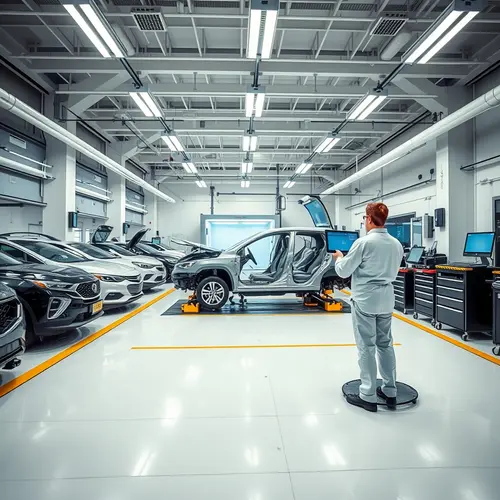
- Structural frame straightening using computerized measuring systems that verify alignment within millimeter tolerances
- Unibody repair for modern vehicle architectures where the frame and body form a single integrated structure
- Advanced driver assistance system (ADAS) recalibration for cameras, radar sensors, and lidar units that control automatic braking and lane-keeping
- Paint matching and application in climate-controlled spray booths with spectrophotometer color analysis
- Mechanical and electrical diagnostics to identify hidden damage in suspension, steering, and electronic control modules
Insurance Networks and Direct Repair Programs
Many collision centers participate in Direct Repair Programs (DRP) with major insurance carriers. These partnerships streamline the claims process but require facilities to meet strict quality standards and submit to regular audits.
DRP status doesn’t automatically indicate superior quality, but it demonstrates a shop’s willingness to guarantee workmanship and maintain consistent repair documentation. Non-network facilities can deliver identical quality without DRP agreements, particularly independent shops that specialize in luxury or exotic vehicle restoration.
| Factor | DRP Network Shop | Independent Specialist |
|---|---|---|
| Insurance Coordination | Streamlined, direct billing | Customer handles reimbursement |
| Parts Sourcing | Often aftermarket options | Typically OEM parts priority |
| Specialty Vehicle Expertise | Variable by location | Focused manufacturer training |
| Warranty Coverage | Lifetime guarantees common | Shop-specific terms |
Evaluating Collision Auto Center Repair Quality Standards
Superior collision centers demonstrate expertise through verifiable credentials rather than marketing claims. Look for facilities displaying current I-CAR Gold Class certification, ASE (Automotive Service Excellence) technician credentials, and manufacturer-specific repair authorizations.
The welding certifications matter significantly for structural repairs. Aluminum welding requires AWS (American Welding Society) D1 certification, since improper technique creates brittle joints that fail in subsequent collisions. Modern vehicles increasingly use aluminum in structural components to reduce weight and improve fuel economy.
Hidden Damage Assessment at a Collision Auto Center
Visible body damage represents only the surface layer of collision effects. Professional diagnostics identify compromised structural integrity, damaged airbag sensors, and electronic control module failures that don’t trigger immediate warning lights.
Computerized estimating systems like CCC ONE and Mitchell scan vehicle diagnostic trouble codes during initial assessment. However, these systems only capture what the vehicle’s onboard computers detect. Experienced technicians perform manual inspections of suspension mounting points, subframe connections, and crumple zone deformation.
The Repair Process Timeline and Communication
Transparent collision auto center operations provide detailed repair plans with realistic completion timelines. Parts availability drives schedule variations more than labor hours, particularly for luxury vehicles or discontinued models where components require overseas shipping.
Quality facilities photograph damage documentation at multiple repair stages and provide digital access through customer portals. This transparency prevents supplement estimate disputes and gives vehicle owners confidence in repair methodology.
Parts Selection: OEM vs Aftermarket vs Recycled
Insurance companies frequently pressure collision centers to use aftermarket or recycled components to reduce claim costs. This practice raises legitimate concerns about fit, finish, and long-term durability.
OEM parts carry manufacturer warranties and guarantee proper integration with vehicle systems. Aftermarket components vary dramatically in quality, from Certified Aftermarket Parts (CAPA) that meet OEM specifications to budget alternatives with poor tolerances. Recycled OEM parts from salvage yards offer cost savings while maintaining original manufacturer quality, provided they’re sourced from low-mileage donors.
Vehicle owners maintain legal rights to specify OEM parts regardless of insurance preferences, though this may require out-of-pocket cost differences depending on policy coverage limits.
ADAS Recalibration Requirements
Modern collision repair demands sophisticated electronic recalibration that many shops overlook. Replacing a windshield, bumper, or front grille disrupts camera and sensor positioning that controls automatic emergency braking, adaptive cruise control, and lane departure warnings.
According to the National Highway Traffic Safety Administration (NHTSA), improperly calibrated ADAS systems create false security. Drivers assume safety features function correctly when sensors actually operate outside design parameters or remain completely disabled.
Professional collision auto center facilities invest in manufacturer-specific diagnostic equipment and maintain updated software subscriptions. Static calibration uses alignment targets in controlled environments, while dynamic calibration requires test driving specific routes at particular speeds to initialize system learning algorithms.
Common Collision Auto Center Repair Misconceptions
The collision repair industry suffers from persistent myths that mislead vehicle owners during facility selection:
Myth: Insurance companies determine where you must repair your vehicle. Federal and state consumer protection laws guarantee vehicle owners the right to choose any licensed repair facility. Insurance carriers can recommend preferred shops but cannot mandate their use.
Myth: Dealership collision centers always provide superior repairs. Dealership affiliation doesn’t guarantee technician expertise or equipment capabilities. Many independent facilities maintain higher certification levels and invest more aggressively in technology upgrades than franchise operations.
Myth: Quick repairs indicate efficiency. Rushed collision work frequently cuts corners on preparation, painting, and reassembly quality checks. Proper paint curing requires specific temperature and humidity conditions over multiple days.
Red Flags in Collision Repair Estimates
Deceptive collision centers exhibit warning signs during initial consultations. Estimates that seem dramatically lower than competitors often exclude necessary procedures or substitute inferior materials.
Legitimate facilities provide itemized estimates showing labor hours, parts specifications, and material costs. Vague line items like “repair damage” or “blend panels” suggest incomplete damage assessment that leads to supplement charges mid-repair.
Pressure tactics to sign authorization forms immediately before completing insurance coordination indicate problematic business practices. Professional operations allow customers adequate time to review estimates, verify insurance coverage, and ask technical questions.
Collision Auto Center: The Diminished Value Consideration
Even perfect collision repairs create diminished value that affects vehicle resale prices. Comprehensive vehicle history reports through Carfax and AutoCheck permanently record accident claims, reducing market appeal regardless of repair quality.
Savvy vehicle owners negotiate diminished value compensation through insurance settlements, particularly for newer vehicles with significant pre-accident equity. This requires independent appraisals documenting market value reductions based on accident severity and repair extent.
Choosing a certified collision auto center with documented repair procedures and OEM parts usage minimizes diminished value impacts. Complete repair documentation serves as evidence during future sales negotiations, demonstrating professional restoration rather than quick cosmetic fixes.
Selecting Your Collision Repair Partner
The collision center you choose becomes a long-term relationship partner rather than a one-time service provider. Quality facilities stand behind their work with transferable lifetime warranties that cover both materials and labor.
Visit prospective facilities before accidents occur. Observe shop organization, equipment condition, and technician professionalism during routine hours. Ask about average repair timelines, supplement estimate frequency, and customer satisfaction metrics.
A professional collision auto center treats vehicle restoration as precision engineering rather than cosmetic improvement. The facility protects your safety, preserves your vehicle’s structural integrity, and maintains its long-term value through meticulous attention to manufacturer specifications and proven repair methodologies.
More Stories
Auto Detailing: Ultimate 7-Step Expert Guide
Auto Detail Jobs: 7 Facts You Must Know First
5 Essential Auto Body Repair Tips