

Table of Contents
BMW 2002tii restoration begins with a childhood memory in Fort Chambly, Quebec, just south of Montreal. From an early age, my grandfather, who built the very first gasoline automobile in Canada, the Fossmobile, shared his love of cars with me. His stories and hands-on curiosity likely sparked my lifelong fascination with automobiles. I grew up believing that a great car was more than transport; it was craft, history, and character on wheels.
Neighbors let me test-drive their MGBs, Triumphs, and Minis, yet nothing prepared me for the 1972 BMW 2002tii. A BMW 2002tii restoration dream started the day I sat behind its wheel and felt how smooth and quick it was. It had stronger horsepower than the others and hugged the road with confidence. I promised myself then that someday I would own one of these remarkable coupes.
While researching these coupes in early 2009, I found a gem in Calgary, Alberta, in remarkably original shape. It was all original, with no prior modifications or attempted rebuilds. I bought it quickly based on photos and my trust in the seller. He was only the second owner, the odometer showed just 45,000 miles, and the car had started life in the United States with its first owner traced to Colorado.
A BMW 2002tii restoration is worth the effort because the tii is more valuable and more coveted than a standard 2002. Finding one in good shape with no owner modifications is increasingly hard. The tii, short for touring international injection, has rare mechanical parts that cost more. The original car used a Kugelfischer mechanical fuel-injection system, a first for BMW, and its 2.0-liter engine made about 125 to 140 horsepower with 127 to 145 lb-ft of torque.
BMW 2002tii restoration: Finding an Unmodified 1972 Gem
I hired a classic-car carrier to pick it up and deliver it to Burlington, Ontario. The car had been partly repainted once, but the job was poor, with heavy body filler, cracked paint, and small visible rust spots. That was only what I could see. Other surprises were still waiting once the trim and panels came off.
When the coupe arrived from Calgary, a BMW 2002tii restoration check at the local BMW dealer showed it needed very little for safety and certification. Compression was near factory spec and even across cylinders. We cleaned the fuel tank, flushed all fluids, changed oil, oil filter, and spark plugs, and completed a strict brake inspection. After that, I drove it for a few weeks to learn its habits.
For the most part it ran well, but age had tired some parts. It felt slow, had some vibration, and handled bumps poorly. My plan was to use only original equipment manufacturer parts wherever possible. That choice cost more up front, yet it protected fit, value, and the honest feel I remembered from the 1970s.
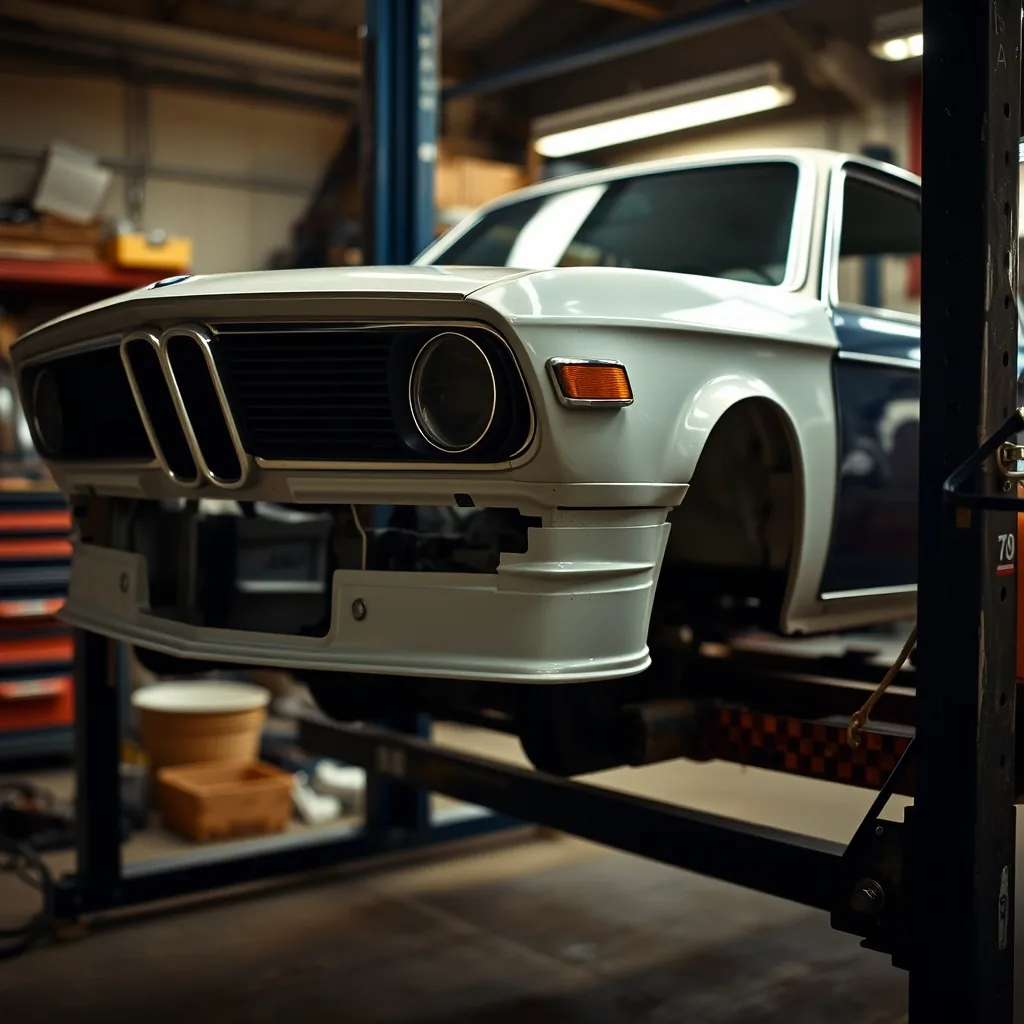
Mechanical Overhaul: Fuel, Rubber, and Suspension Renewal
I started this BMW 2002tii restoration with the mechanical systems. The full fuel-delivery path needed cleaning, and I replaced three fuel filters at the pump, the injection unit, and the in-line filter. The water pump was partly seized, so it came next. I had worried about the mechanical injection system, yet it looked sound and responded well to careful service.
Next came every rubber part for inspection and replacement. Seals, belts, engine mounts, and body bushings all needed review. Because of the car’s age, I replaced all rubber body and mounting bushings, then fitted new hoses and belts. If you own a newer BMW too, this BMW maintenance cost guide helps you budget for wear items before they fail.
A BMW 2002tii restoration must address shocks and exhaust, and mine were in rough shape. Both rear shock absorbers had rusted through, so I installed all-new shocks with new tower mounts. The full exhaust was rusted as well. The manifold was still fine, but every pipe and the muffler had to be replaced for safe, quiet driving.
The worst part was the rubber Rotoflex guibo joint between the transmission and driveshaft. This all-rubber mount has metal sleeves for eight bolts and cushions vibration. As I took it apart, it crumbled in my hands. The rear universal joint was seized in one direction, so I replaced the full driveshaft as a sealed unit. The clutch slave cylinder leaked as well, so it went to recycling along with brake cylinders, gaskets, pads, and other small wear parts.
The gearshift linkage needed work because the lever wobbled in every gear. The 2002tii has a long throw, but mine made shifting a chore. All bushings, sleeves, and linkages were worn or missing. Once replaced, it shifted tightly through all four gears, just as it would have from the factory. Inside, the car was excellent. Even the telltale dashboard clock worked, and only cleaning plus one seat-bracket weld were needed.
BMW 2002tii restoration: Bodywork, Rust Repair, and Paint
This BMW 2002tii restoration moved to the body after the mechanical work. I stripped all chrome, including lights, grilles, and bumpers. Those pieces were in excellent shape, so I stored them safely for winter. That pause was the right time to focus on metal, rust, and paint without risking bright trim.
A BMW 2002tii restoration often hides more rust than it shows, and mine proved it. Outer rocker panels, both rear fenders, and the right front fender had clear spots, while inner sills looked suspect. Once the old front fenders came off, the full right pillar between fender and door hinge was almost all rust. We ground it out and welded in new metal to rebuild strength.
We stripped the car to bare metal, tin-filled the rear outer fenders, and fitted new front fenders. After small dent repairs, came skim coat and long sanding sessions. Doors, trunk lid, and hood were painted off the car, while the shell was masked for the booth. Then came six coats of original color plus three coats of clear. To keep any BMW finish bright after paint, follow this guide to keep your BMW in good condition for washing and routine care.
Final Assembly and Driving the Finished Coupe
Careful reassembly finished this BMW 2002tii restoration, with chrome, lights, grilles, and bumpers refitted step by step. With the mechanical work sorted, it drove the way I remembered from the 1970s. I was finally ready to show the 1972 coupe to anyone willing to look. It became everything I had dreamed, and my passion felt complete.
I had the vintage coupe exactly the way I wanted it, smooth, tight, and honest. For factory history, parts data, and heritage records, I often check BMW Group Classic when I want to confirm details for this era. That habit keeps the story straight and helps other owners trace colors, trims, and production notes with care.
If you plan a BMW 2002tii restoration, start with the most original car you can find and budget for hidden rust. Use quality parts, document each step, and drive the car between stages to learn its needs. The reward is a light, balanced coupe that still makes every short trip feel special.
How much does it cost to restore a classic 1970s coupe?
Cost depends on rust, parts supply, and paint needs. A solid car with small rust can stay modest, while hidden rot, rare trim, and full paint raise the bill fast. Get a lift inspection, list mechanical, body, and trim work separately, and add a reserve of at least twenty percent for surprises.
What rust areas should I check first on a vintage coupe?
Start with rocker panels, inner sills, fender edges, door pillars, floors, and trunk drops. Look for filler, bubbling paint, and soft metal, then confirm with a magnet test and a shop lift review. Early finds save money because small patches are far cheaper than full panel rebuilds.
Is it better to use original parts or quality reproductions?
Use original parts where fit and value matter, such as trim, lenses, and interior details. Choose proven reproductions for wear items like bushings, hoses, and mounts when stock is gone. Keep receipts and photos so future buyers can see what was kept, rebuilt, or replaced.

Dinda Margareta is a senior automotive editor at Auto Store covering collision repair, EV tech, and classic restoration. 5+ years, 130+ guides. Method: OEM position statements and repair data cross-reference. Author of 2,333 auto guides since 2022.

More Stories
Classic Car Restoration: 7 Iconic Show Builds
Muscle Car Restoration: 7 Reasons It Steals Hearts
Porsche Restoration: 7 Reasons It Is Worth It