

Table of Contents
pack car for road trip safely when you treat loading as a safety task, not only a storage puzzle. For most families, summer means vacation and travel, and driving remains more flexible and often more affordable than flying. Your trunk holds far more than a single carry-on, yet space is still limited, so a clear plan keeps every mile comfortable and secure.
A crowded cargo area is not only annoying when you cannot find sunscreen or snacks. Loose bottles, shifting boxes, and unsecured gear distract the driver and can turn dangerous in a sudden stop. Proper loading keeps passengers safe, protects fragile items, and makes unpacking at your destination fast and stress free.
How to pack car for road trip Without Wasting Space
Drivers who pack car for road trip vacations often overload the rear without a clear order, then waste time repacking at every stop. Start on the driveway by laying out everything you plan to bring, checking each bag and box against a simple list. This quick inventory prevents the classic mistake of filling the trunk only to discover a forgotten duffel bag still sitting by the door.
Break down bulky items first, including strollers, folding chairs, and sports gear, so each piece packs as flat as possible. Place sharp or rigid objects in their own sturdy boxes, then fill gaps with soft goods such as blankets, jackets, and pillows. Soft fillers stop sliding, cushion fragile loads, and protect interior trim from scratches and dents.
Visualize the full stack before you load a single bag, placing heavy suitcases low and forward to keep the center of gravity stable. For bikes, kayaks, or oversized camping kits, use a quality bike rack or roof rack and follow the maker installation steps closely. Once everything fits, take a photo of the layout so you can repeat the same order on the drive home.
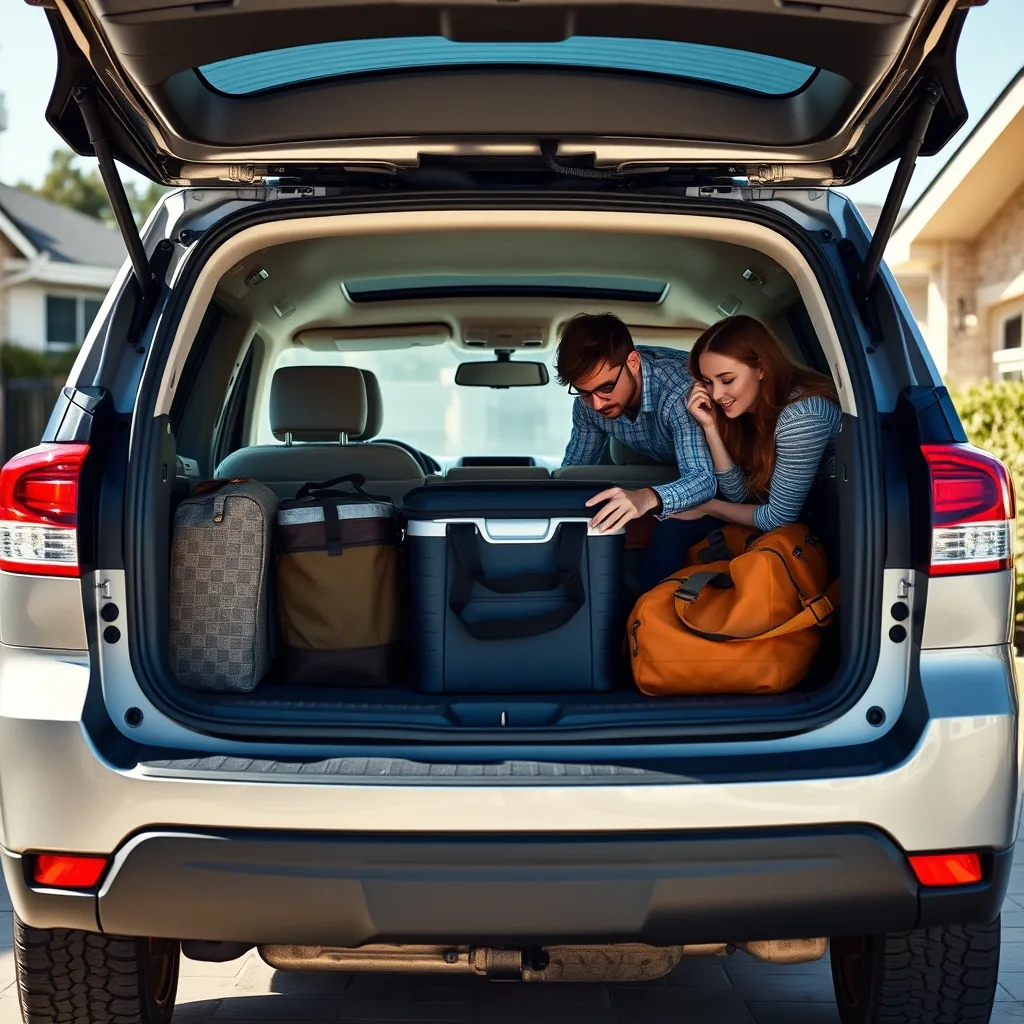
Keep daily essentials within easy reach in the cabin, including first aid kits, water, snacks, chargers, and entertainment for kids. Store these items in small baskets or soft bins, wedged firmly between seats or on the floor to stop sliding. A tidy cabin reduces mid-drive reaching and keeps attention on the road ahead.
Why Smart Loading Protects Every Passenger
Properly packing a vehicle reduces risks and helps keep all passengers safe and organized, notes Thomas McIntyre Schultz, who leads technology and product communications at Volvo Car USA. At best, shifting cargo is a constant distraction that pulls your eyes toward the rearview mirror. At worst, loose objects become projectiles that can cause severe injury in a crash.
According to Volvo loading recommendations, an object weighing 44 pounds can strike with force equal to about 2,200 pounds in a head-on collision at just 30 miles per hour. That single fact changes how you view heavy coolers, toolboxes, and grill grates. Secure weight low, strap it down, and never let hard items sit freely behind passengers.
Safety Rules When You pack car for road trip With Kids and Gear
If you pack car for road trip routes with mountain passes, long desert stretches, or busy interstates, treat restraint as mandatory rather than optional. Stow the heaviest bags at the bottom of the trunk and away from seatbacks, lashing them to built-in tie-down anchors with rope or bungee cords. For cargo stacked in the back seat, add a simple safety net to block forward movement during hard braking.
Vehicle shape changes the rules, so match your method to what you drive. Sedans with separate enclosed trunks give natural separation between people and luggage, which cuts distractions from shifting loads. SUVs and hatchbacks need extra care, since the cargo bay shares airspace with passengers and tall stacks can slide forward without warning.
Leave about four inches between tall luggage and the glass to prevent cracks and rattles on rough roads. Keep rear windows and mirrors fully visible, since blocked sight lines force unsafe lane changes and parking mistakes. If you need ideas for roomy and comfortable models, review our guide to the best summer road trip cars before choosing extra racks or boxes.
Adjust Your Car for Heavy Loads and Long Miles
Heavy loads change braking distance, steering feel, and tire wear, so check your owner manual before adding a hitch rack or small trailer. Confirm payload limits, towing limits, and whether higher tire pressure is needed for full cargo. Small adjustments here protect suspension parts and keep handling predictable on steep grades.
Older SUVs and crossovers may need fresh shocks, worn bushings, or weak latches fixed before a long haul, so read our practical used car inspection checklist if your vehicle has high miles. A short pre-trip check of brakes, lights, fluids, and spare tires costs little time. It prevents roadside delays that can ruin a tight vacation schedule.
When you pack car for road trip memories, a calm routine matters more than perfect Tetris skills. Strap down heavy gear, cushion the gaps, keep essentials handy, and verify visibility before you shift into drive. You will arrive healthy, relaxed, and ready to enjoy a well earned summer break with family and friends.
Where should heavy bags sit in a loaded SUV?
Place the heaviest suitcases and coolers low and close to the rear seatback, secured to tie-down anchors with straps or cord. Keep lighter soft bags on top and leave glass and mirrors fully visible. Recheck straps after the first fuel stop, since loads often settle.
Do sedans and hatchbacks need different loading methods?
Yes. A sedan trunk creates a closed wall between people and cargo, which limits distractions. A hatchback or SUV shares cabin air with luggage, so use nets, anchors, and lower stacks to stop forward movement. Never pile hard items above seat height without restraint.
How do I use a roof rack without risking damage?
Follow the maker torque specs, balance weight side to side, and lock every latch before leaving. Keep total roof weight under the manual limit and store only light bulky items up top. Check fasteners at each rest stop and drive slower in crosswinds.

Dinda Margareta is a senior automotive editor at Auto Store covering collision repair, EV tech, and classic restoration. 5+ years, 130+ guides. Method: OEM position statements and repair data cross-reference. Author of 2,333 auto guides since 2022.



More Stories
TAG Heuer Releases A Special Edition Monaco Watch In Time For The 2022 Monaco Grand Prix
History On the Light Box
Review: The 2022 Honda Passport TrailSport trucks up